
NUCCA in one sentence
NUCCA is a form of upper cervical chiropractic care that precisely measures the position of the top bone in your neck, then guides it back toward balance with a light, gentle touch.
The letters stand for the National Upper Cervical Chiropractic Association. Doctors trained in the NUCCA method focus on the atlas (C1) and use imaging and careful calculations to plan each correction. At Ennis Chiropractic in Houston’s Clear Lake area, NUCCA is the only kind of care we provide. If you’re wondering what is NUCCA and whether it fits your situation, this page walks you through the basics.
Where the upper cervical spine is
“Cervical” means neck. The upper cervical spine is the very top of your neck, just below the skull. It includes two small bones: the atlas (C1) and the axis (C2).
The atlas is shaped like a ring. It holds up your head and allows it to nod and tilt. The axis, just below it, lets your head turn side to side. Together they give your head a wide range of motion, which also makes this area more prone to shifting than other parts of the spine.
Why such a small area gets so much attention
Through the center of the atlas runs the lower part of the brainstem as it becomes the spinal cord. This is one of the busiest junctions in the body. Signals that help control balance, breathing, heart rate, muscle tone and pain travel through it. Blood vessels that supply the brain pass close by, and so does the fluid that cushions the brain and spinal cord.
When the atlas sits out of its normal position, the head can tip slightly off center. The body adapts by tightening muscles and shifting posture to keep the eyes level. Many people feel the results as neck tension, headaches, dizziness or nerve pain. The upper neck isn’t the cause of every symptom. But when it is a contributing factor, correcting it can make a real difference for many patients.
How NUCCA care works
NUCCA care follows a clear, step-by-step process. It’s methodical by design.
1. Listen and examine
Every patient begins with a detailed health history. Your doctor wants to know what you’re feeling, when it started, what you’ve tried and what you hope to get back to. Non-invasive exams help show whether the upper neck may be involved.
2. Measure precisely
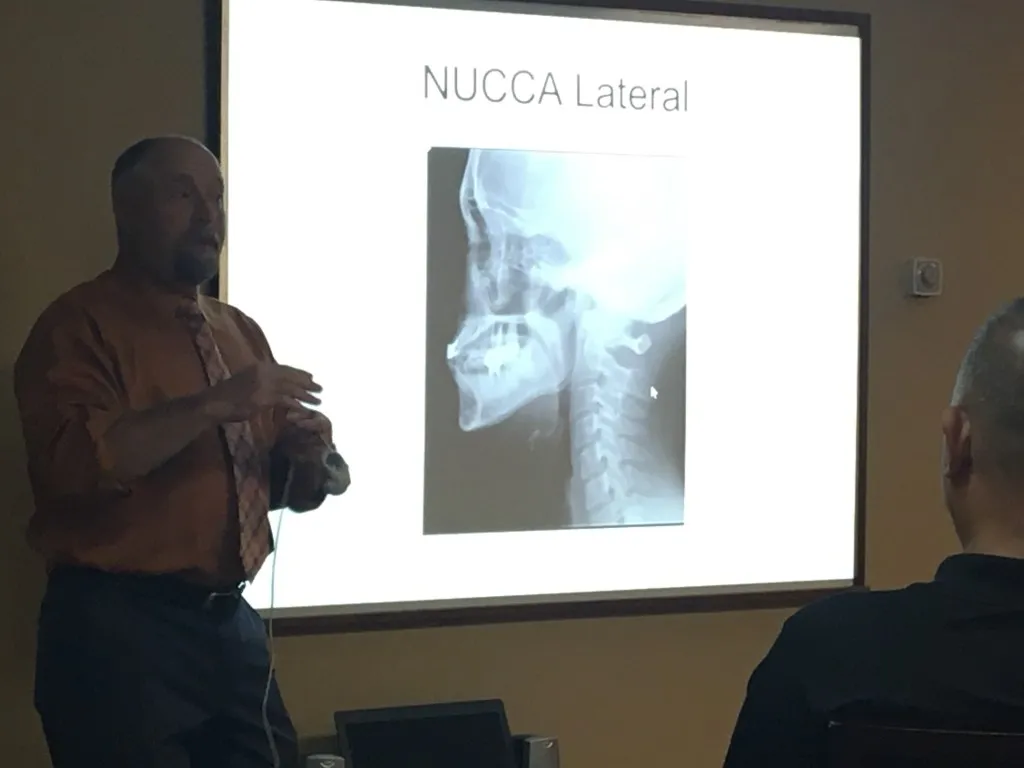
If NUCCA care looks appropriate, we take specialized X-rays of the upper neck from several angles. These images show how your atlas has shifted in relation to your skull and the rest of your spine. Because every misalignment is unique, the measurements are specific to you.
3. Correct gently
Using those measurements, your doctor calculates the direction and depth of the correction. You lie on your side with your head on a firm support. The doctor applies a light, steady pressure just behind your ear. There’s no twisting, no popping or cracking, and no sudden movement.
4. Recheck and monitor
After the correction, we recheck your alignment. When appropriate, we take follow-up images to confirm the change. On later visits, we check first and adjust only if you’ve shifted. Over time, the goal is for your body to hold its correction longer.
You can read more about each step on our main NUCCA upper cervical care page.
What NUCCA feels like
Most people expect chiropractic care to feel forceful. NUCCA usually surprises them. The correction is so light that some patients aren’t sure it happened until they see their measurements change.
After a correction, you’ll rest for a short time so your body can settle. Many people describe feeling relaxed. A few notice mild, temporary achiness or tiredness as their posture adjusts, which usually passes quickly. Your doctor will explain what to expect for you.
Who seeks NUCCA care?
People of all ages come to NUCCA doctors, from infants to seniors, because the correction is so gentle. Many arrive after years of trying other treatments. Common reasons include:
- Vertigo and dizziness or balance problems
- Migraines and headaches, especially after a fall, car accident or sports injury
- Neck pain and stiffness that keeps coming back
- Facial pain such as trigeminal neuralgia, plus numbness or tingling
Others come in after a fall, a car accident or a sports injury, even when their symptoms are mild, because they want to know whether their upper neck was affected. Parents often bring children after a hard tumble on the playground or the field. And some people simply want care that is gentle, measurable and free of twisting or cracking.
NUCCA is not a replacement for your physician’s care. It works alongside it. If your exam points to something outside our scope, we’ll say so and help you find the right provider.
What research tells us
Upper cervical care has been studied, but the research is still growing. Much of what is published comes from case reports and small studies rather than large trials. That’s an honest limit, and we’ll always be upfront about it. What we can show you is your own data: your measurements before and after each correction, and how your symptoms change over time.
Is NUCCA right for you?
The best way to find out is a thorough exam. Your $79 new patient visit includes a health history review, non-invasive exams, a one-on-one consultation and, if NUCCA is a good fit, a personalized care plan with clear pricing. Curious how it compares with the chiropractic you may have tried before? Read NUCCA vs. traditional chiropractic.